Monday, June 26, 2023

Little DorritLittle Dorrit by Charles Dickens My rating: 4 of 5 stars

Charles Dickens is known for his vivid and realistic portrayal of the social and moral problems of Victorian England, and Little Dorrit is no exception. In this novel, he creates a rich and complex narrative exposing the corruption, injustice, and hypocrisy of his society, especially the institution of debtors’ prisons and government bureaucracy.

Techniques used include:

  1. Serial publication

    Dickens published Little Dorrit in 19 monthly instalments between 1855 and 1857. This allowed him readership engagement and feedback response. He also used cliffhangers and suspense to keep interest levels high for the next part.

  2. Plotline Complexity

    Dickens interweaves multiple plotlines involving different characters and settings around the main thread involving Amy Dorrit and Arthur Clennam. Examples: the mystery of Mrs Clennam’s secret, the rumored murder of Rigaud, the surprise inheritance of William Dorrit, and the financial ascendency and downfall of Merdle. Plotlines are connected via coincidences, foreshadowing and symbolism.

  3. Characterization

    Memorable and unique Dickensonian characters represent various aspects of the society, such as the innocent and selfless Little Dorrit, the proud and deluded William Dorrit, the kind and generous Arthur Clennam, the cold and cruel Mrs Clennam, the greedy and fraudulent Merdle, the rebellious and resentful Miss Wade, and the comic and absurd Flora Finching. He also uses florid names, local dialects, physical descriptions and personal habits to convey their character and roles.

  4. Satire

    Satire is used to mock and criticize the flaws and vices of the society, such as the inefficiency and corruption of the Circumlocution Office - a symbol of the government’s red tape and indifference; the pretentiousness and snobbery of the newly rich Dorrit family as they forget their humble origins; and the gullibility and greed of those who blindly follow Merdle’s financial schemes.

  5. Pathos

    Dickens also used pathos to evoke sympathic emotions toward his characters, especially those suffering from poverty, injustice and oppression. The harsh realities of life in the debtor prison are depicted to help explain how Little Dorrit's personality was forged; Dickens describes the loneliness and despair of Arthur Clennam resulting from his estrangement from his mother; the guilt of the tragic Mrs Clennam haunted by her past is slowly unveiled throughout the novel; he portrays the slow march of madness resulting in the tragic death of William Dorrit as he tries to find meaning in his sudden release from poverty.


Plot Spoiler Alert Beyond This Point


This novel exposes the corruption and injustice of the English society through the lives of two characters: Amy Dorrit and Arthur Clennam. Amy, also known as Little Dorrit, was born and raised in a debtor prison, where her father William Dorrit was imprisoned. Arthur Clennam is a middle-aged man who, after returning to England following his father’s death, becomes interested in Little Dorrit’s story. While helping her family by investigating their debt he uncovers a dark secret about his own mother’s involvement in a fraudulent scheme.

In classic Dickensian style, various characters are introduced representing the greed, hypocrisy, bureaucracy, and cruelty of English society, including the Meagles family, the Circumlocution (how not to do things) Office, Mr. Casby, Mr. Pancks, Rigaud, and Miss Wade. Predictably, he falls in love with Little Dorrit, but faces obstacles from his former fiancĂ©e Flora and Little Dorrit’s own pride and loyalty to her father.

The climax occurs after Pancks uncovers a long-lost inheritance for William Dorrit, who leaves prison with his family only to lose his money and his sanity. Arthur Clennam also loses his fortune and ends up in the same prison where he first met Little Dorrit. However, with the help of friends, they escape their misfortunes and get married at last.

View all my reviews

Wednesday, February 15, 2023

David Copperfield

David CopperfieldDavid Copperfield by Charles Dickens
My rating: 5 of 5 stars

I am on a long journey through all of Dickens' novels, in chronological order. David Copperfield marks the 60% mark on that trek. This was my most enjoyable read so far. The characters rolled out on this life tale are compelling. The tragic beginnings of Copperfield's life draw the reader into the story line, and the threads woven around the numerous characters and their interactions with David make this book well worth reading. It is highly recommended.

View all my reviews

Tuesday, January 10, 2023

Number One is Walking

Number One Is Walking: My Life in the Movies and Other DiversionsNumber One Is Walking: My Life in the Movies and Other Diversions by Steve Martin
My rating: 5 of 5 stars

This book is a hilarious collection of Steve Martin movie-making memories and "diversions" made alive by Harry Bliss cartoons.

View all my reviews

Tuesday, August 16, 2022

Dombey and Son

Dombey and SonDombey and Son by Charles Dickens
My rating: 4 of 5 stars

I'm reading the Kindle edition of The Complete Works of Charles Dickens and this story marks the midpoint of this prodigious tome. Dombey and Son, centered around a flawed, wealthy, and prideful father and his neglected loving daughter, is typical of how Dickens tells a story. His love of the variety and subtlety of human life teaches the reader what it means to be sincerely happy, sad, frightened, abandoned, loved, or forgotten. There is horrible misery that many of his characters feel in this book, balanced by joy and hope found in the intricate personal relationships he artfully constructs. His narration of the characters' adventures is often humorous even if often obscured by the nineteenth century colloquialisms and a writing style some may find confusing and stilted.

View all my reviews

Tuesday, December 14, 2021

Martin Chuzzlewit

Martin ChuzzlewitMartin Chuzzlewit by Charles Dickens
My rating: 4 of 5 stars

The saga of Martin (the younger) Chuzzlewit is a complicated tale of human foibles that includes an American frontier adventure that almost doomed its protagonist. Mixed into this tale are large portions of family intrigue, young love, and disguised villainy. The 19th century language was a personal challenge and those used to modern novel constructs may find the read stilted and obtuse. The author attempts (via spelling) to mimic "lower class" verbalizations that I often found irritating, if not unintelligible. Despite these drawbacks, I found myself absorbed into the Dickensian world carefully constructed over the first fifty chapters as the threads were pulled together in the final four.

View all my reviews

Thursday, August 19, 2021

Barnaby Rudge

Barnaby RudgeBarnaby Rudge by Charles Dickens
My rating: 4 of 5 stars

Say "insurrection" in the United States these days, and most will think you are referring to the events in Washington D.C. on January 6, 2021. Well, if you think THAT disgraceful Capitol mob scene qualifies as an insurrection, this book may change your opinion.

The underlying theme of Barnaby Rudge are the extraordinary destructive anti-Catholic London riots that occurred in June 1780, and how a simple-minded youth (Barnaby) was swept up in the week-long events. Lord George Gordon was the leader of the Protestant Association that organized a large demonstration march on Parliament designed to force a repeal of the Papists Act of 1778. This act eased restrictions on Catholics, allowing them to join the British armed forces. Like the events of January 6, this crowd got out of control, invaded the Parliament building and roughed up several MPs. However, this was followed by nights of terror that resulted in Catholic churches being sacked, homes of well-known Catholics being invaded, looted, and burned, and other senseless violence against anyone seen as non-Protestant. The nightly Gordon riots were finally brought under control by a massive deployment of military and mass arrests of those leading the rioters.

This Dickensian novel has the hallmarks of his work, and the pacing of a serialized publication. The eighty-two chapters are slow going in the beginning as Dickens fleshes out the characters, but the last half of the book rewards the patient reader with a gripping Mother-Son tale of woe and redemption.

View all my reviews

Thursday, July 15, 2021

The Old Curiosity Shop

The Old Curiosity ShopThe Old Curiosity Shop by Charles Dickens
My rating: 4 of 5 stars

This is a classic Dickens tale, with an intricate plot and monumental cast of characters 50 chapters in the making. The last 23 chapters closes the extensive plot web to a satisfying, albeit sad, ending.

View all my reviews

Monday, June 15, 2020

The Pickwick Papers


The Pickwick PapersThe Pickwick Papers by Charles Dickens
My rating: 4 of 5 stars

After reading "A Tale of Two Cities" I realized the paucity of my Dickens knowledge and decided to read all his novels. Thankfully Kindle has the Dickens "Complete Novels", and I have finally finished the 8% of this tome that holds his first novel, reading during ticks of otherwise wasted time.

The 57 chapters reminded me of viewing movie serials made in the 1930-40's, with Pickwick and his traveling companions finding new ways to tangle themselves in various misadventures in the vividly Dickensian illuminated English countryside. The serialization makes the reading somewhat choppy, but one can't help but admire Samuel Pickwick and his loyal servant Sam Weller as they unflinchingly meet each challenge, overcome obstacles, and (mostly) enjoy themselves immensely.

I'm looking forward to continuing my Dickens saga (next: Oliver Twist).

View all my reviews

Thursday, April 26, 2018

The Parasite

The ParasiteThe Parasite by Arthur Conan Doyle
My rating: 4 of 5 stars

This short story explores the dark potential for mesmerism. The plot advances through the diary entries of a scientist who manages to get psychically entangled with a twisted, sociopathic hypnotist. Arthur Conan Doyle's style is rather stilted, but this adds to the plot more than it detracts. Good, quick read - available free as epub at http://www.gutenberg.org/ebooks/355

View all my reviews

Thursday, January 18, 2018

Slaughterhouse-FiveSlaughterhouse-Five by Kurt Vonnegut
My rating: 5 of 5 stars

This classic anti-war novel by Kurt Vonnegut is semi-autobiographical. The title is taken from the Dresden, Germany Prisoner of War camp building assigned to Billy Pilgrim, the protagonist, after his capture during the winter of 1944-1945. Pilgrim manages to survive the Dresden firebombing while time-shifting to other life scenes in the past/future. This includes being abducted by an alien spacecraft and taken to the planet Tralfamadore many light-years from Earth. The Tralfamadorians treat Billy as a zoo exhibit during his time there, and are amazed by the Earthling's belief in "free will" - the aliens can see in four dimensions, seeing everything in the space-time continuum. This ability leads to a universal fatalistic worldview - death is meaningless, each human is viewed as a 4D centipede with a baby at one end and the death personna at the other - "so it goes".


View all my reviews

Darkest Hour: How Churchill Brought England Back from the BrinkDarkest Hour: How Churchill Brought England Back from the Brink by Anthony McCarten
My rating: 5 of 5 stars

This book was written in parallel with a screenplay for the movie of the same title. It is a good read, with a central plot point of the "wobbly" nature of Winston Spencer Churchill (WSC) immediately after becoming Britain's prime minister in the spring of 1940. The book concentrates on how WSC navigated the crisis of May 1940 as Nazi Germany swamped the French military, isolated the British Expeditionary Force (BEF) at Dunkirk and threatened to invade Great Britain. I enjoyed reading about the "inside game" revealed by the author, especially the WSC relationship with his PM predecessor, Neville Chamberlain, and his foreign secretary, Edward Wood, 1st Earl of Halifax. The attention, time and extreme care WSC spent on his oratory is also explored by the book. The final sentence of the Epilogue reveals the book's theme: "That May, Winston Churchill became Winston Churchill."


View all my reviews

Friday, January 31, 2014

San Onofre is NO Sans-O C-Free ...

Southern California Edison announced the closure of the San Onofre Nuclear Generating Station (SONGS) on June 7, 2013. It was a sad day for me, since I worked at SONGS from 1983 until 2010 and have many, many fond memories. The people working there were/are top-notch, and deserve a lot of respect for the decades of safely, efficiently providing affordable electric power to our region. Had the construction of the replacement steam generators been flawless, the station could have continued producing oxygen-free (sans-O) carbon-free (C-Free) energy to the Southern California grid for another twenty years, if not longer.

SONGS, because it did not oxidize carbon-based fuels to generate power, produced zero carbon dioxide "pollutant" greenhouse gas while providing 2200+ megawatts when both units 2 and 3 were operating. A modern combined-cycle plant produces 345g/kWh of CO2, which translates to about 760,000 kilograms (or 838 short tons) of carbon dioxide produced per hour to fully replace the 2-unit power from SONGS.

Faulty replacement steam generators caused both units to shut down early in 2012. The public debate over SONGS during the next eighteen months made it clear nuclear power has no long-term future in California. Fusion power may eventually prove a viable replacement, but it always seems 10 to 20 years away (and has been for the last thirty years).

While replacing a few large "bulk" baseline energy sources, like SONGS, with a large number of small renewable sources is possible, it involves a massive, expensive realignment of the existing energy grid away from the current "one-way electricity flow" model (from generators through transmission lines to distribution substations to consumers).  The future grid will feature "two-way" electrical flow, with thousands (if not millions) of "micro" "genersumers" or "consumerators" that can supply or absorb energy. Bulk electrical providers will still exist, but their contribution will significantly decline. Micro- or mini-grids will be common - small localized grids that can independently provide power to neighborhoods, business parks, schools, universities, etc. while maintaining a capability to connect the larger "macro" power grid when needed.

So, maybe closing SONGS is for the best. Large electricity generation stations may be the modern equivalent to the battleships at the start of World War II - they were already obsolete, but those in power just didn't realize it. Pearl Harbor shocked them into a fuller, sobering understanding. The June 2013 closing of SONGS could deliver a similar epiphany to our leaders over how our national electrical grid must evolve into a more resilient, secure, "greener" (and - alas - expensive) energy future.

Thursday, February 03, 2011

Chevy Volt Sighting at DistribuTech


Nice Electric Car - umm, I mean Extended Range Electric Vehicle (EREV)

Me likee :-)


Thursday, December 02, 2010

Thanksgiving 2010

A short clip from our Thanksgiving vacation with family in Olive Branch, Mississippi.

A good time was had by all ...

Saturday, November 13, 2010

San Diego Basset Meetup

Proof: There are other Basset Hounds

Buddy had a great time with the other Basset Hounds at today's Meetup. About a dozen Bassets exchanged canine business cards (via the nose, of course). A good time was had by all...

Friday, November 12, 2010

Buddy To Visit Own Kind

Buddy is fed up with the Old English Sheepdogs. His long wait for another Basset Hound to play with is almost over. On Saturday, November 13, Buddy goes to his first visit with the hounds of the San Diego Basset Hound Meetup Group. Will share more in a day or two.

Wednesday, June 16, 2010

Dinner time

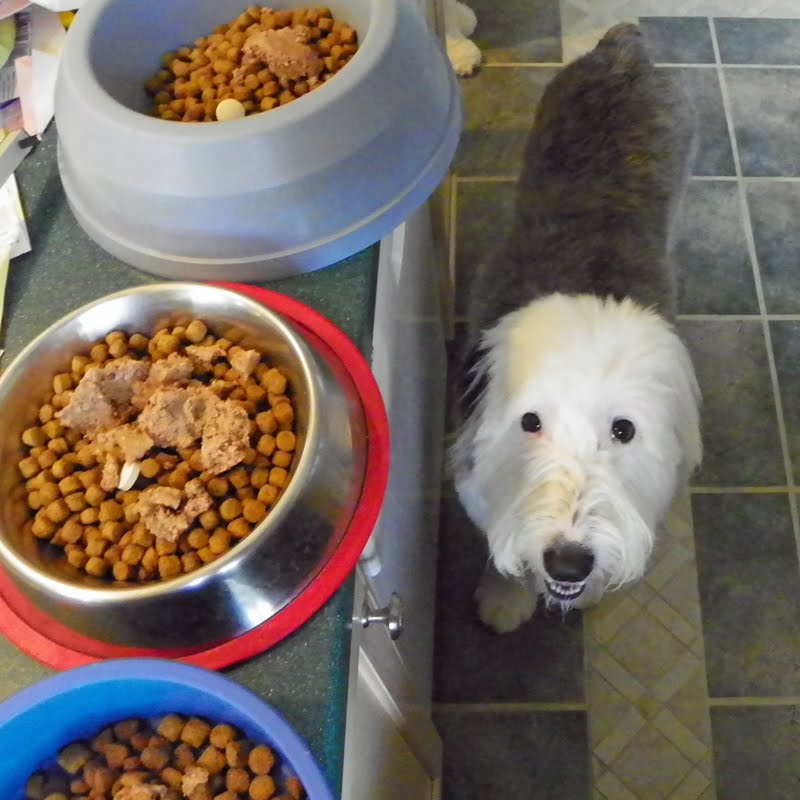
Ivy used to be a very deliberate eater. Those days are gone forever - she is the first in line whenever the food bowls make their appearance.

Friday, January 08, 2010

This video shows how to make a low-cost multi-touch computer control system based on a Wii Remote camera connected to the PC (direct or Bluetooth) and homemade infrared (IR) pens.

Pretty cool, especially considering the cost of comparable commercial products.

Monday, December 07, 2009

Our local vet had a Santa day for the pets on December 6. Our three dogs participated (in order of appearance): Ivy, Theo and Buddy. A good time was had by all.